This Charge of Contempt is On Us All
May 8th 2026
A leading barrister, a King’s Counsel, may be facing contempt of court proceedings for, it seems, allegedly informing a jury of their independence—what many call jury equity—that a jury may judge according to their own convictions. The KC is also said to have ignored the trial judge’s directions as to the relevance of certain matters, and to have misled the court.
Other lawyers have come to the defence of this barrister, warning that if barristers fear contempt proceedings then this will have a chilling effect and put the rule of law at risk. These important proceedings began under reporting restrictions. Could they not easily have been adjourned until the time for reporting restrictions became unnecessary—because this affects us all?
Of course, lawyers should be independent and not be threatened with contempt proceedings for properly representing their clients, but there has been a chilling effect in place for a long, long time. This case is not happening at a time when lawyers have been permitted to stand up in court and tell jurors about jury equity, or to routinely push back when a judge decides certain defences are irrelevant and to be kept from the jury.
| But for their right to judge of the law and the justice of the law, juries would be no protection to an accused person even as to matters of fact; for, if the government can dictate to a jury any law whatever, in a criminal case, it can certainly dictate to them the laws of evidence. That is, it can dictate what evidence is admissible and what inadmissible, and also what force or weight is to be given to the evidence admitted. If the government can thus dictate to a jury the laws of evidence, it can not only make it necessary for them to convict on a partial exhibition of the evidence rightfully pertaining to the case, but it can even require them to convict on any evidence whatever that it pleases to offer them. (Spooner, An Essay on theTrial by Jury, 1852) |
In fact, most lawyers have gone along with what they all tell each other (and the public) is a rule prohibiting the mention of jury equity in court. There may have been a time when some did not know, not properly, about jury equity, but now many lawyers speak of it publicly. Many of the speeches and writings in support of jury trial—passionate defences against the Government’s move to further remove trial by jury—have included the information that a jury may do justice whereas a judge must follow the letter of the law (to paraphrase Geoffrey Robertson, (1993) ‘Freedom, the Individual and the Law’).
Despite this, it appears that many lawyers believe that there is a rule against telling jurors about jury equity in the court room. And, not only do we not tell jurors about jury equity, but we sit in silence whilst the judges routinely direct jurors that the opposite is true—lawyers seem content for jurors to be told that they must follow the judge’s direction as to the law.
And now, we find ourselves in a situation where more and more members of the public are aware of jury equity. I dare say the concept has been somewhat weaponized by certain causes, but if we properly educated the people, calmly, with care and reverence, at a time before that when they might encounter a placard in the unfamiliar, daunting and fraught environs of the court steps, then such weaponization would not be possible. The principle of jury equity is not something just for protest cases: it is a safeguard for us all. If authentic trial by jury with full jury independence were reclaimed throughout the land, then we would soon have no need for protest.
If we held the knowledge of the true power of the jury close, and passed it each to each, so that men could never take it from us—then we would have health. But we are not there now. Now, because of our silence, inattention and lack of care, we find ourselves at a place where we risk a ‘binding precedent’ or legislation which purports to remove this safeguard, removing or restricting the ability and duty of the people to judge the law of their community. And we tend to proceed as if judges and politicians have a right to remove the Law of the Land in this way. They do not—for it is the people who are the law of their land and to remove this is unlawful and makes the people mere order-followers. We know from Nuremberg, that order-following is wrong and destructive, yet we routinely fail to apply this principle when it comes to the enforcement of our law. But it is our law—it belongs to the people—it does not belong to the government or the judges or the lawyers—and we must see to it that it is returned to where it belongs.
LW
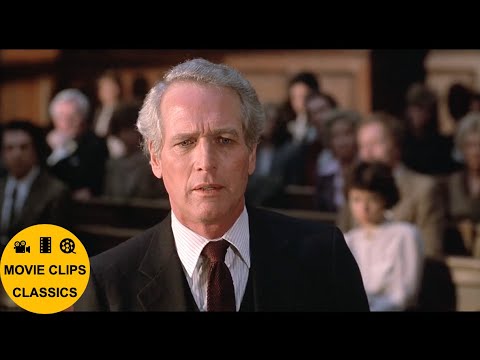
“But today you are the law. You are the law, not some book, not the lawyers, not a marble statue, or the trappings of the court. See, those are just symbols of our desire to be just. They are, in fact, a prayer. I mean, a fervent and a frightened prayer.
In my religion, they say, "Act as if you had faith; faith will be given to you."
If we are to have faith in justice we need only to believe in ourselves and act with justice. See, I believe there is justice in our hearts.”
Frank Galvin’s closing speech to the jury in “The Verdict"